Keokradong (কেওক্রাডংয়ের চূড়ায়)
Published:
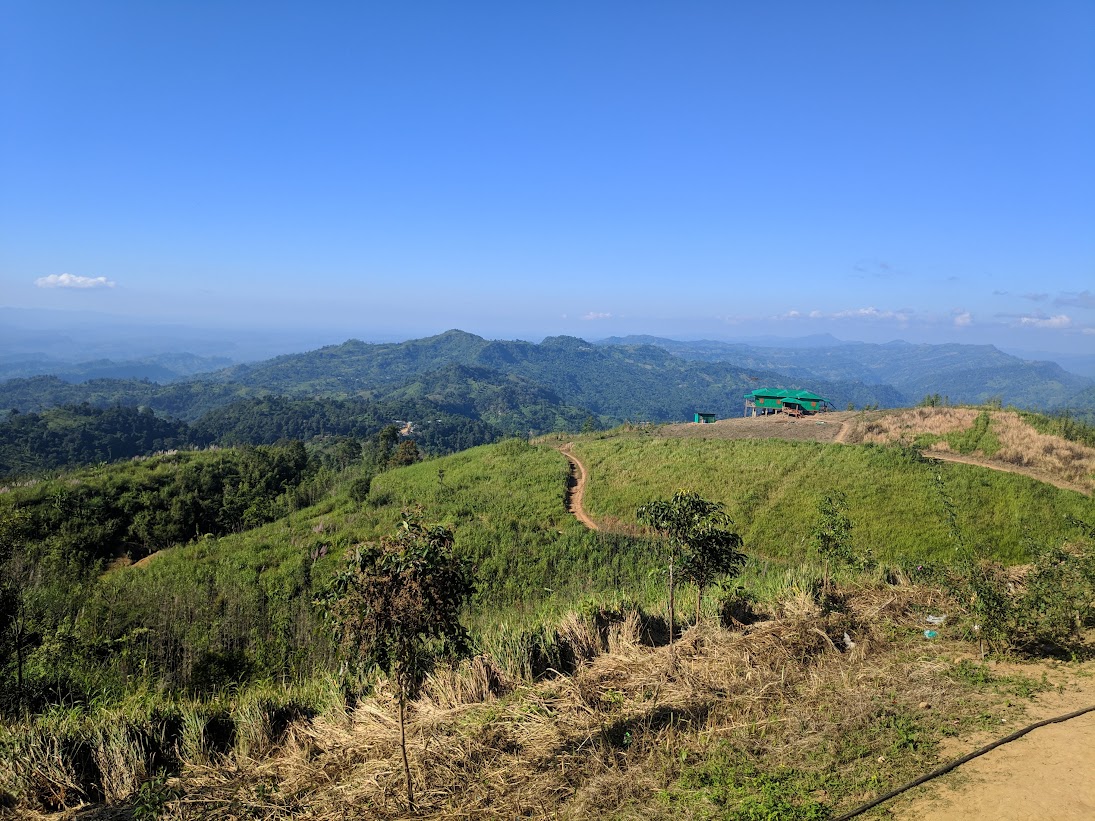
View from Keokradong Peak
PREFACE
As I prepare for my PhD thesis proposal, all I want to do right now is anything but write it. I believe this is fairly common among humans: we tend to avoid tasks that require intense mental energy and switch to activities that demand only passive attention, distracting ourselves from the task at hand. Like most people, my go-to passive habits are scrolling through Instagram or Twitter(X), watching informative vlogs or television series.
However, these distractions are rarely enough to truly reset my mind. They may help me avoid my work for a while, but they do not give me the sense of renewal I am actually searching for.
When I was in Bangladesh, I used to travel to the mountains at least four or five times a year, even if only for a day. Strangely, I hated much of the experience while I was actually there because almost every trip involved intense hiking. I remember telling my friends, and myself, millions of times, “This is my last hiking trip. I am done.”
I am definitely not the fittest person in my group, and I never was. Yet I had a hiking experience during my college that few people could match, and I am proud of that.
This led me to ask myself an obvious question: if hiking made me feel exhausted, weak, and sometimes almost dead, why did I keep doing it? What was the point? Eventually, I realized that the suffering was part of the point. I needed to feel weak. I needed to experience the pleasure of taking a sip of water after hours of hiking. I needed to be reminded that comfort becomes meaningful only after discomfort, and that even the simplest things can feel extraordinary when they are earned.
Someone once said, “If your thoughts get too big, go somewhere you feel small.” I completely resonate with that idea. The mountains make me feel small. They remind me how insignificant my life, my problems, and my worries are when placed against something so ancient and immense. From time to time, I need that feeling to ground myself and realign my life with the larger universe. Since coming to the US, however, I have mostly stopped hiking. It is not because I no longer enjoy it. Rather, the common idea of hiking here does not fully appeal to me.
The United States certainly has breathtaking landscapes, and I hope to visit many of them someday. Yet most of the trips here do not feel like the kind of mind-resetting journey I need. My idea of hiking is not driving to a trailhead, walking for three, four, or six hours, and then driving home the same evening. My idea of hiking is getting lost in the wilderness for several days or weeks, disconnecting from people and devices, and simply being alone with nature and myself. I do not want only to visit the mountains; I want to surrender to them for a while.
That is why I have not been particularly enthusiastic about hiking trips in the US. Perhaps that will change when I grow older and have less physical strength. If I ever become responsible for a family of my own, I may have to stop risking my life here and there. At that point, I may settle for road trips, at least for the sake of the people who love me.
But I am not there yet. Right now, I can feel that I am completely out of sync with the universe, and I desperately need my kind of trip. Still, I am not here today to write my entire philosophy of hiking or life. Perhaps that is a story for another day. Today, I want to return to the beginning, to the journey that created this relationship between me and the mountains.
Every obsession has an origin. Mine began with a trip I was not even sure I wanted to take.
THE JOURNEY
Today, I want to write about the defining trip of my life, a canon event, as some people might call it. I am quite certain that if I had not taken that trip, my life would have turned out very differently.
Ironically, I was not particularly enthusiastic about going. I was not even sure whether I wanted to hike in the mountains at all. The timing also felt inconvenient because it came during a difficult and chaotic beginning to our second year of college.
Soon after the semester began, a terrible incident occurred in a BUET residential hall. One of my batchmates was killed as a result of political violence. The incident shook the entire university. Protests continued at BUET for months afterward, until we eventually succeeded in removing student politics from the campus, at least temporarily.
After months of grief, anger, and unrest, everyone needed some room to breathe. Before classes resumed, we, CSE17, planned a trip to Keokradong.
Keokradong is often semi-officially described as the highest peak in Bangladesh, although it is actually only the fifth-highest. From its summit, however, all four of the higher peaks can be seen.
I wish I had known that at the time. Today, I can point them out without hesitation, but back then, I did not even know what I was looking at. In a way, perhaps that ignorance was part of the beauty. Everything was new, unnamed, and waiting to be discovered.
At that point, I had almost no experience in the mountains. The closest thing I had done was visit the Sitakunda Range a few months earlier, which I no longer think of as mountains, perhaps just hills.
Therefore, I had no idea whether I would enjoy spending two or three days in the mountains, staying in small villages, sleeping on floors, and using open toilets. None of it sounded particularly comfortable.
Today, if people know only one thing about me, it is probably my obsession with mountains and the amount of risk I have taken simply to be among them. Yet in November 2019, before the Keokradong trip, I knew almost nothing about mountain trekking. I did not even know whether I would like it.
It feels strange to think that nearly seven years have passed since that journey, while so many of its memories remain crystal clear in my mind. Perhaps certain memories survive not because the events were perfect, but because they quietly divided our lives into a before and an after.
Neither of my parents wanted me to go on trips, and they usually tried their best to stop me. I understand their perspective. They were highly protective and simply wanted to keep me close and away from danger so that they could feel secure.
Since I was not especially interested in going either, I did not resist very much.
My sister, however, encouraged me to explore. She told me about her trip to Sajek and how much she had enjoyed it. Several of my friends were also encouraging me to join them. Even if the mountains did not impress me, they argued, at least we would spend some enjoyable time together.
Thus, without knowing whether I would enjoy the journey, I decided to take a leap of faith.
There were 28 of us in total, and we occupied almost the entire 36-seat Shyamoli NR bus. It was also my first long-distance bus journey.
I did not know that buses on the Chattogram highway seemed to race and drift constantly. Everyone was somewhat frightened and repeatedly asked the supervisor to tell the driver to be more careful. I, however, was thoroughly enjoying the experience because I had always wanted to feel what it was like to drift in a high-speed car.
The journey had barely begun, and already I was discovering that fear and excitement could exist together.
It was morning when we reached Chattogram. As we crossed the Karnaphuli River over the Shah Amanat Bridge, the view looked incredible, almost like a bridge I had seen in Need for Speed II. Since then, I have crossed that bridge more than 15 times, but the first crossing remains special.
Because it was November, the road was covered in thick fog. I could barely see the houses or roadside stalls. Eventually, we turned left at Keranir Hat and began heading toward Bandarban.
It was almost 8:00 a.m., and the sun was beginning to shine through the fog. From the bus window, I could see several tall mountains rising in the distance. I had never seen mountains that high before. At that moment, the view was the most beautiful sight I had experienced in my life. Even now, when I close my eyes, I can clearly picture the scenery through the bus window.
My friend Zaber was sitting beside me, and both of us began making little “happiness noises” at the sight. We did not need any sophisticated words. The view had already said everything for us.
With such a beautiful welcome, we arrived in Bandarban town.
Our Chander Gari, a locally used open vehicle designed for the mountain roads, had been booked in advance, so the drivers were already waiting for us. They first took us to a restaurant for breakfast. Afterward, we visited Meghla Park, a common tourist destination in Bandarban, where we spent a few hours before continuing toward Ruma.
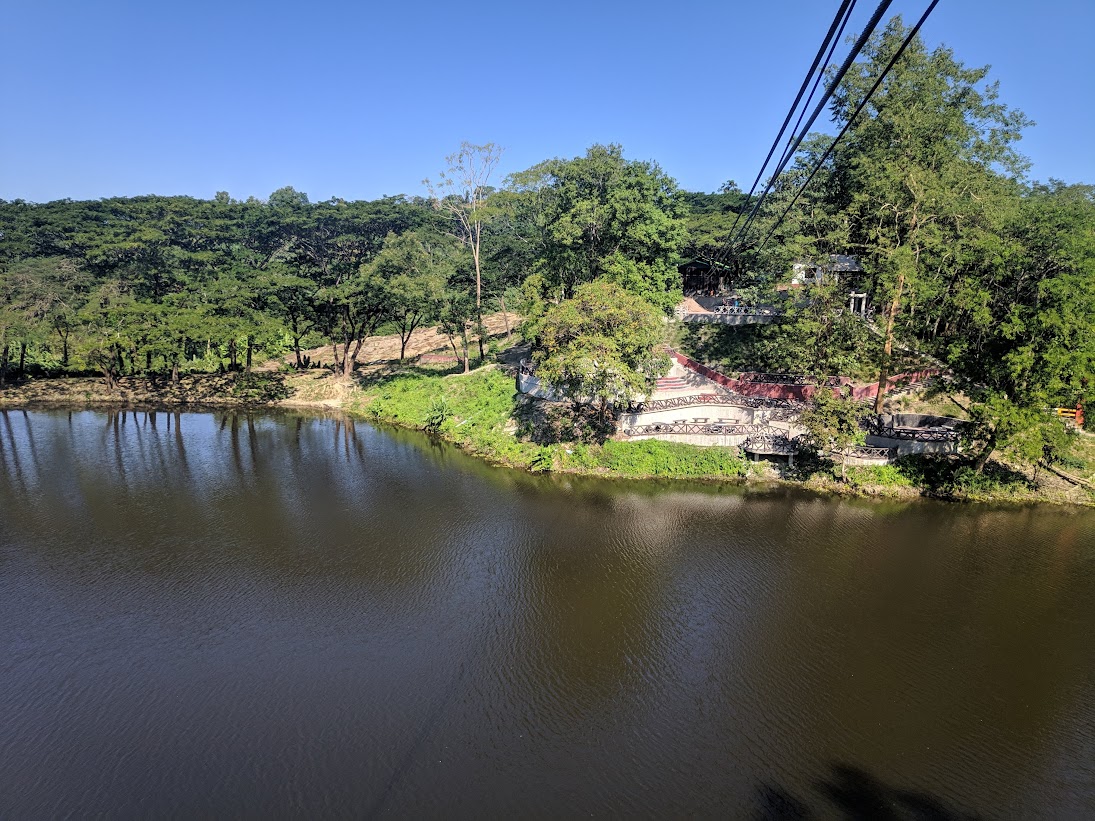
Meghla Park, Bandarban
Like typical college students, we took photographs in every possible permutation and combination. Some of my classmates even recreated a “Komal” meme in the park, which was extremely popular at the time.
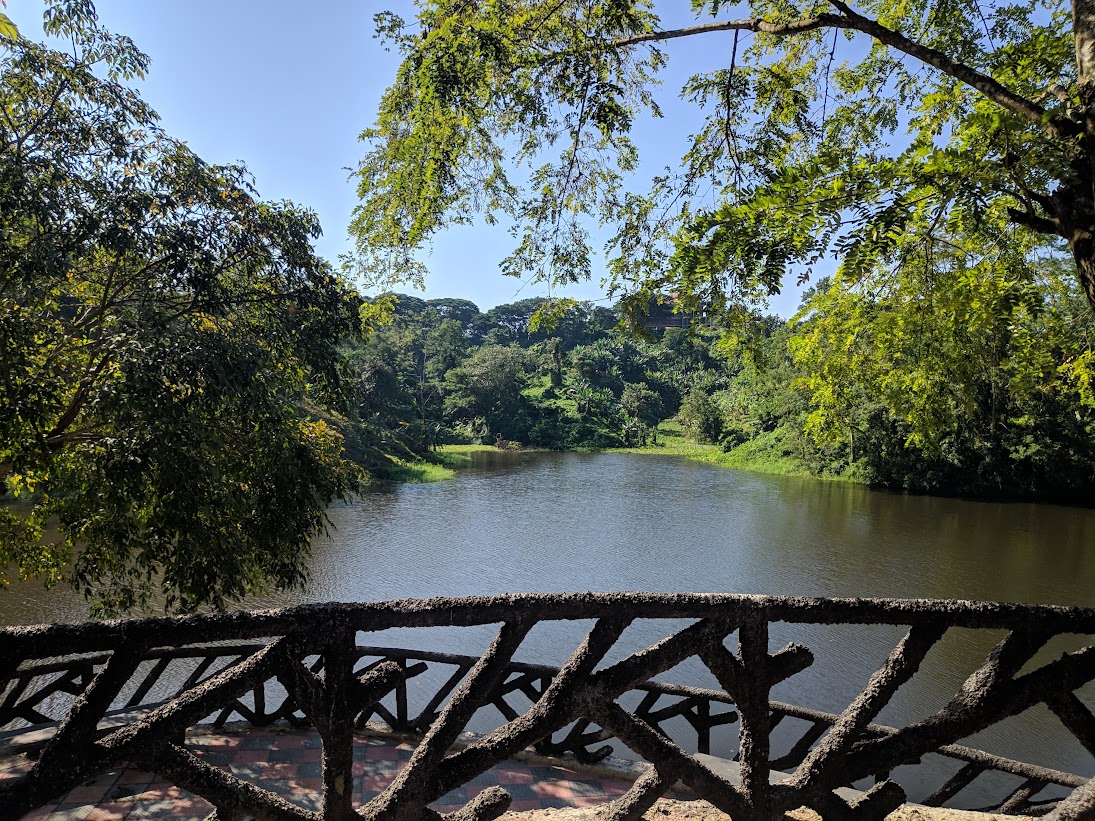
Meghla Park, Bandarban
Meanwhile, a few of us began climbing a small hill at the far end of the park. I was eager to stand near a cliff and experience the view from above.
Little did I know that mountain roads often create the illusion that the destination is always just around the next turn. Even after walking for five or ten minutes, we could not find a cliff. Each time the road curved, we thought the viewpoint would surely appear, but every turn revealed only more road.
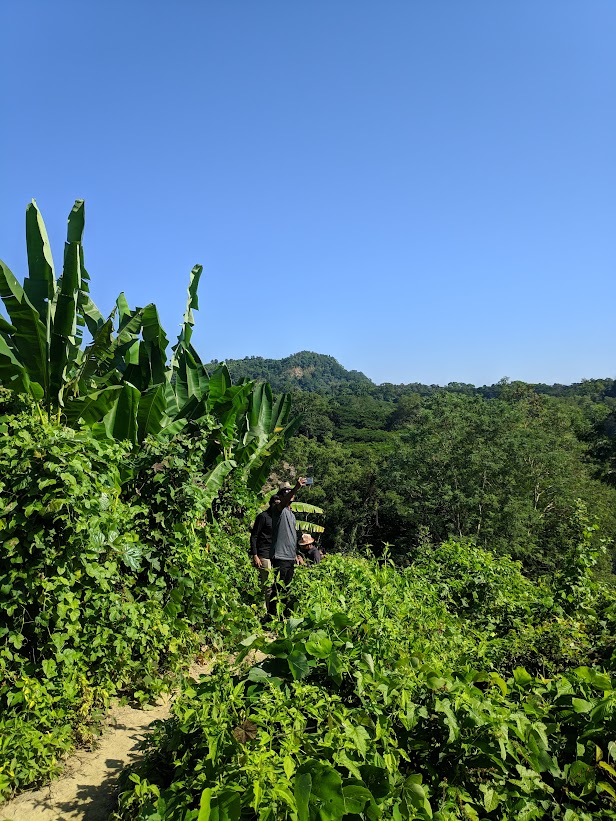
Hiking in Meghla Park, Bandarban
That small experience would later become a metaphor for nearly every hike I took: the place you are searching for always seems close, yet the mountain continues to ask for a little more effort.
Eventually, we gave up, climbed back down, and began our journey toward Ruma.
Slowly, we left the town behind and moved deeper into the mountainous region. The scenery became more beautiful with every mile. Most of my close friends were travelling in the same Chander Gari as I was, and a different version of me tends to emerge whenever I am around them.
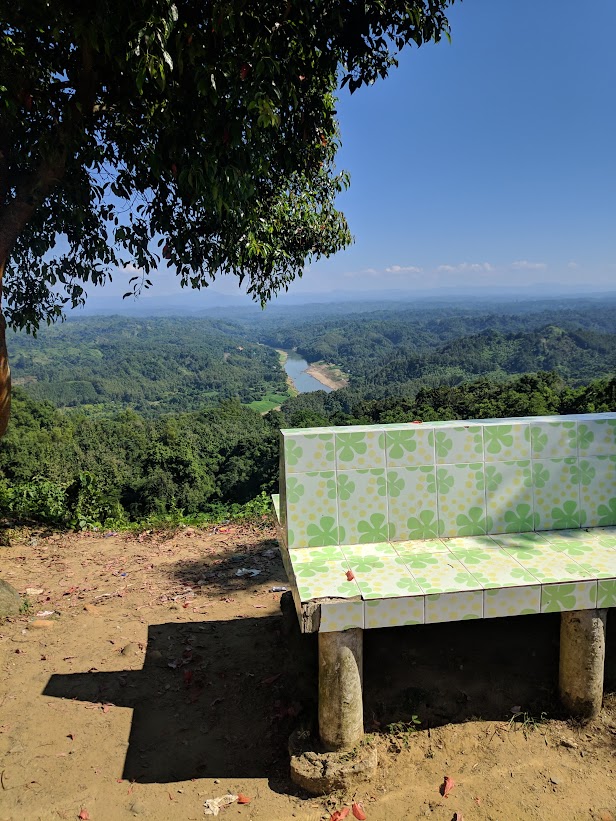
Milonchori, Bandarban, On the way to Ruma
They often bring out the bully in me. I feel guilty about making fun of some of my classmates on different occasions, including during this trip. I later learned that many of my BUET classmates felt nervous around me because they worried that I might mock them for something they said or did.
Their concern was not entirely unfounded. I have always found it difficult to resist making fun of something that strikes me as stupid or absurd. Although I am gradually learning to control that instinct, it still emerges under the right circumstances.
The first such incident during the trip occurred inside the Chander Gari. One of my classmates kept screaming whenever he saw anything beautiful, distracting everyone around him. Soon, I began imitating him. I continued until he stopped, and he did not do it again for the rest of the trip.
Later, I learned that my behavior had genuinely hurt him. But I told myself that I had done what was necessary to make him stop, and I do not regret it.
Eventually, we reached Ruma, where we met our guide, Rittik, and his brother, Prokash. We ate lunch there, obtained permission from the Army to enter the protected area, bought trekking sandals, and started toward Boga Lake, where we would spend the night.
It was almost dark when we arrived. On the way, we had to cross an area called Komla Bazar, which has an extremely steep road. The Chander Gari had to change gears repeatedly, and whenever it did, the vehicle rolled backward slightly.
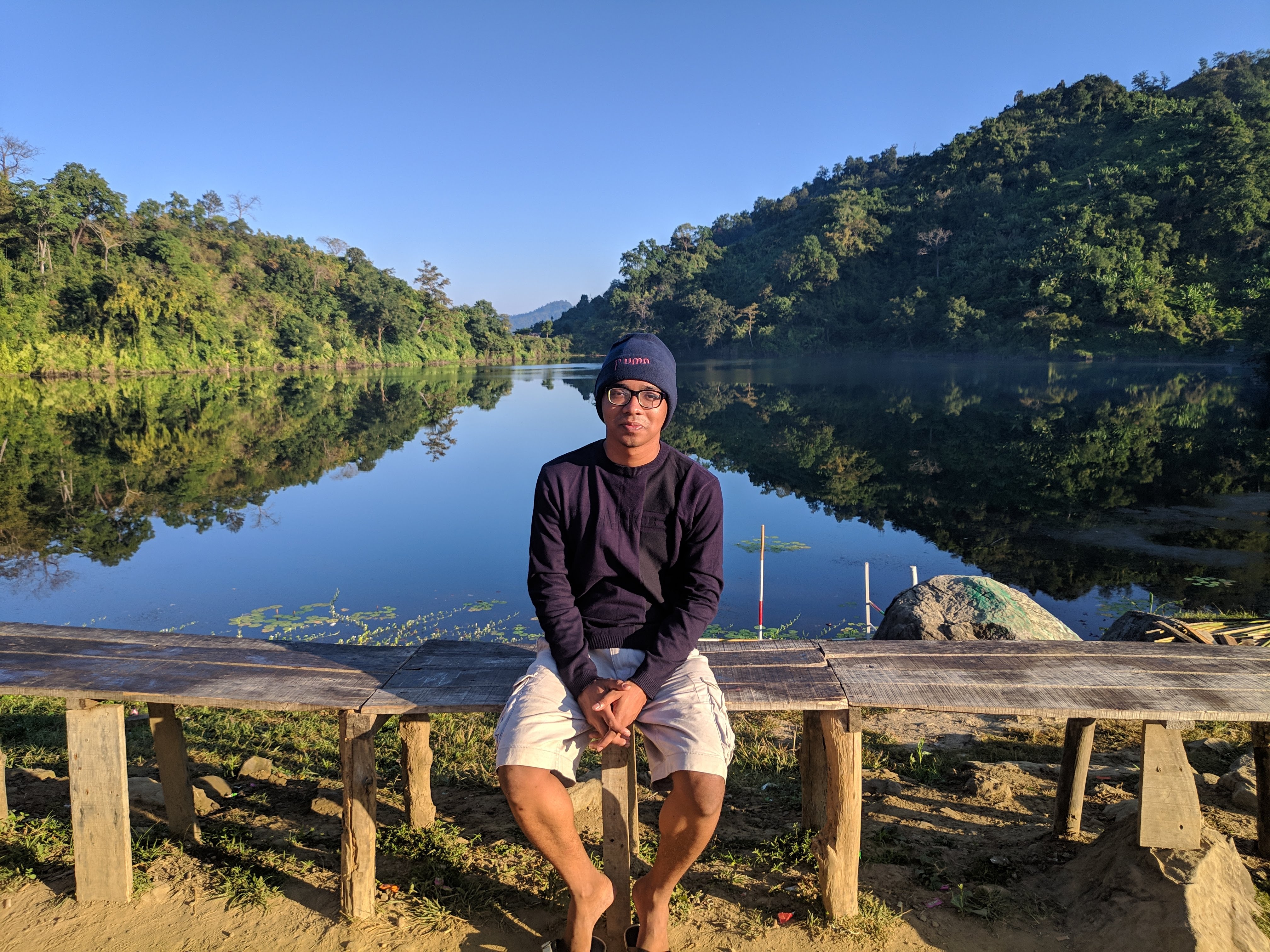
Boga Lake
It was frightening enough on its own, and the nervous whining of some of my friends made the situation feel even more dramatic. Nevertheless, it was an entertaining part of the road trip.
From the following morning onward, there would be no more driving. There would be only our feet, the trail, and whatever strength we could find within ourselves. That night, we had a BBQ beside Boga Lake. There is a local myth that a dragon once carved the lake into the mountain. I have always enjoyed listening to myths because they are imaginative expressions of the human mind, although I do not take them literally.
Our evening ended beside a fire near the lake. Later, I went to a quiet bridge with several of my friends and looked at the stars. Before that night, I had never seen so many stars in the sky.
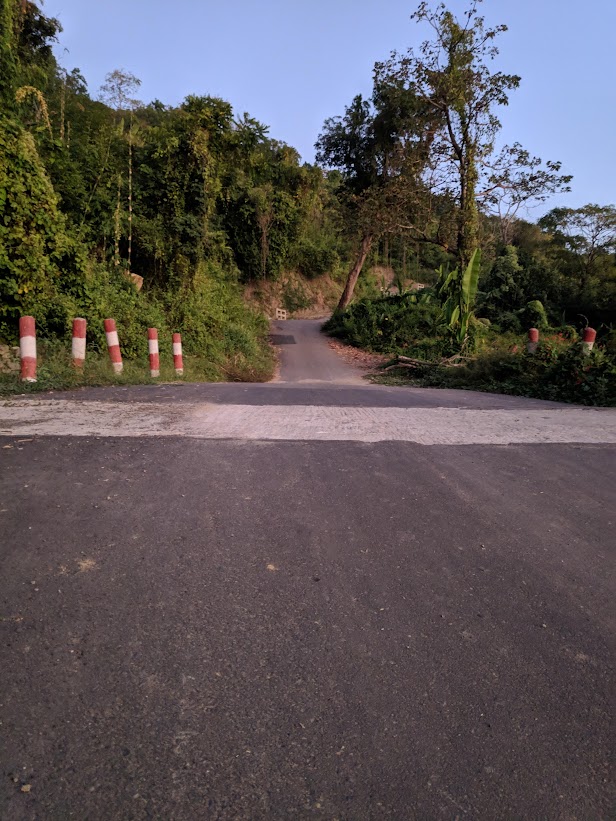
The Bridge beside Boga Lake
Far from the lights of the city, the sky seemed larger than I had ever imagined. It was perhaps the first time during the trip that I sensed how different the world could feel when human noise disappeared.
Later, I continued bullying a few other friends, although I no longer remember why. But, I do remember that they were scared to enter the room the next night until I had fallen asleep.
At that point, I still thought I was simply on a college trip with friends. I did not yet understand that the journey was slowly confronting me with different versions of myself, the curious one, the arrogant one, the frightened one, and the one who was capable of enduring more than he believed.
The hike began the following morning.
By the time I reached the same bridge we had visited the previous night, I was already out of breath.
How was I going to walk for six hours to the peak of Keokradong?
That question stayed with me during the beginning of the climb. The summit felt impossibly far away, and my body seemed to be protesting before the real hike had even started.
One thing I learned from that hike, and from the many hikes that followed, is that it gets easier. The greatest resistance often comes at the beginning. After some time, your body adapts to the effort, your breathing finds a rhythm, and you simply continue with the flow.
It does become easier. You only have to force yourself to hold on during the beginning.
The same principle can be applied to almost every aspect of life, not just hiking. Whether one is writing a thesis proposal, beginning an unfamiliar journey, or trying to change one’s life, the first steps often demand the greatest effort.
I learned many small lessons and came to many realizations at different turns on different mountains. Those lessons remain among the most precious gifts life has ever given me.
Another memorable part of the hike was that some people had developed diarrhea from the food or water at Ruma Bazaar. Hiking for six hours with diarrhea is certainly not easy. Their situation was unfortunate, although from the perspective of the rest of the group, it also produced few moments that were difficult not to find funny.
After several hours of hiking, we reached a waterfall. To reach it, we first had to descend.
Before that trip, I had imagined hiking as a continuous upward movement toward a summit. In reality, hiking rarely works that way. You climb one mountain, descend from it, and then climb another.
Whenever the trail began going downhill, I felt heartbroken because I knew that the lost elevation would soon have to be regained. Every descent meant that another climb was waiting for us.
Yet the reverse was also true. Every difficult ascent would eventually be followed by a descent.
Life works in much the same way. It has its own rises and falls, each arriving in its own time. Life cannot remain entirely up or entirely down forever, and we should not expect it to.
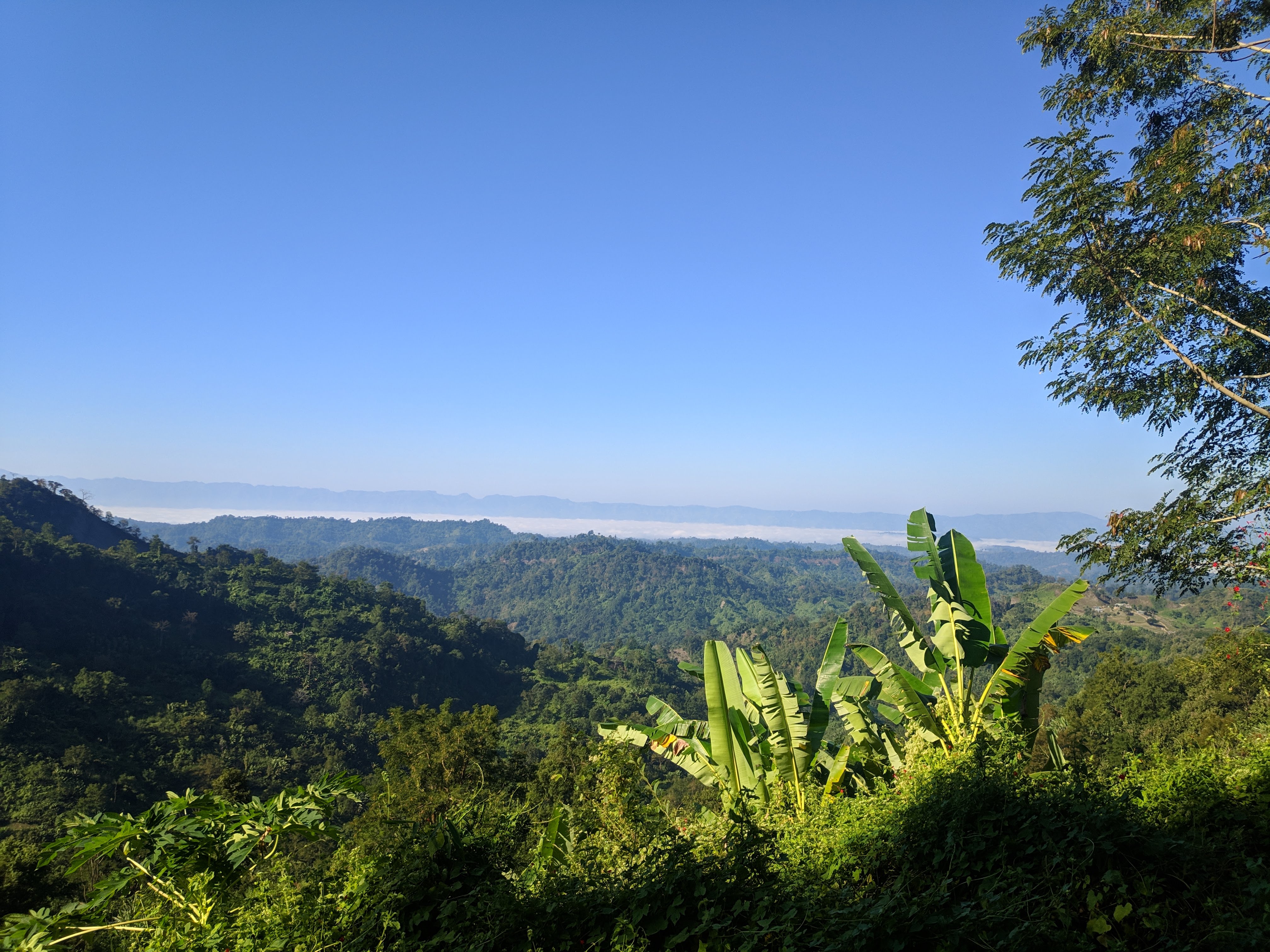
Random View on the way to Keokradong Peak
The waterfall was called Chingri (Shrimp) Jharna. I do not know why it was given that name, but I climbed toward the falling water and took a quick shower to cool myself down.
As a novice, I did not understand how slippery the rocks around a waterfall could be. Predictably, I slipped and badly injured my hip and the joint of my left leg.
For a moment, the entire journey could have ended there.
Instead, I continued. I limped for the rest of the trip and later received painkillers from the Army after reaching the top of Keokradong. The injury was painful, but it was not enough to make me stop.
I remember that I was the fourth person out of our group of 28 to reach the peak.
Perhaps that achievement mattered so much because I had begun the morning doubting whether I could walk for even six hours. By the time I reached the summit, I had discovered that the limits I imagined were not necessarily my actual limits.
Afterward, we ate lunch and walked toward the helipad. To this day, it remains the most beautiful place in Bangladesh to me.
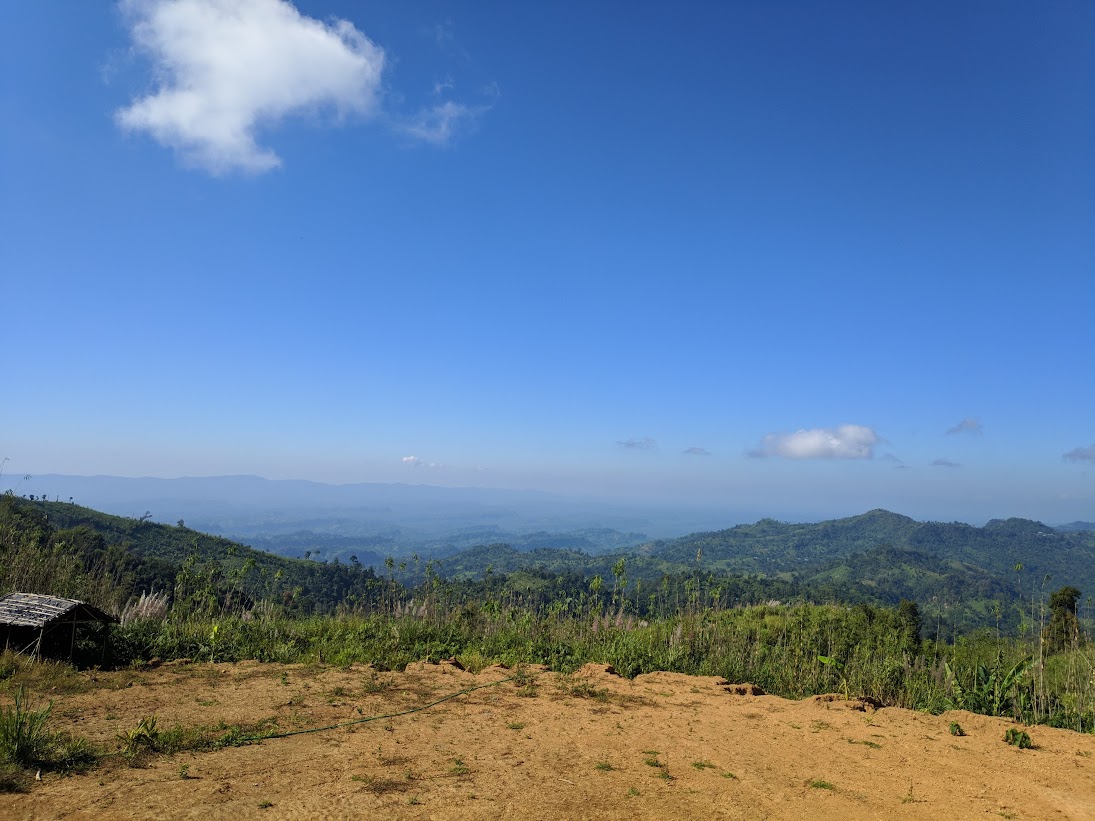
Keokradong Helipad, Bandarban
From there, we could see a panoramic view of much of Bandarban. The mountains appeared to rise and fall endlessly, one behind another, like waves frozen across the horizon.
The Army did not allow us to travel any farther, but people said that the landscape became increasingly beautiful the deeper one went beyond Keokradong.
Standing there, I could understand why someone might spend a lifetime continuing toward the next mountain simply to discover what lay behind it.
I was mesmerized by the endless rises and falls of the landscape. I could clearly see the border between Bangladesh and Myanmar. The trees on the distant mountaintops appeared as tiny points, revealing just how far away they actually were.
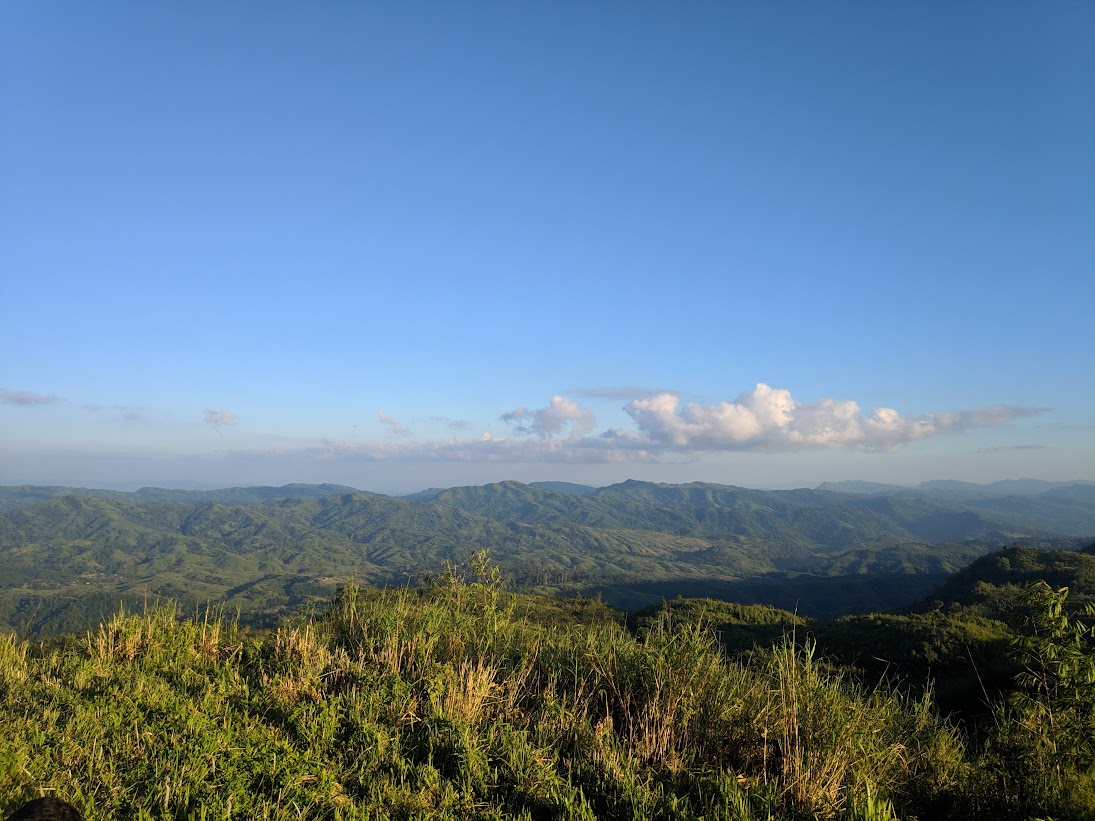
View from Keokradong Peak
Yet from where I stood, it somehow felt as though I could reach them simply by running.
During that moment at the top of Keokradong, I understood how small I was compared with the mountains. Even the clouds seemed to be trying their best to cast shadows over them, but they could cover the mountains only partially and only for a few moments.
The mountains remained.
Once you begin to understand your true place in the universe, you also begin to develop humility. You realize that you are not the center of existence, not even a particularly significant part of it.
The universe existed long before you arrived, and it will continue long after you are gone. You are merely a tiny bubble that appears and bursts within the blink of an eye against the vast scale of the universe.
At first, that realization may sound depressing. To me, however, it felt liberating.
If my existence was so brief, why should I waste it on endless fights, anxieties, and desires? Why should I spend my limited time trying to prove that I was better than someone else? Why should any of us?
Why not enjoy the moments and the life we have before it becomes too late?
Do we really need to compete with one another simply to establish who is superior? Is there not enough in this universe for all of us to be happy, content, and realize our dreams?
Instead of constantly fighting and trying to topple one another, why can we not show a little more humility? Why can we not become more cooperative, grow together, and try to leave the world slightly better than we found it?
Standing on that mountain, these questions were no longer abstract philosophical ideas. They felt immediate and personal.
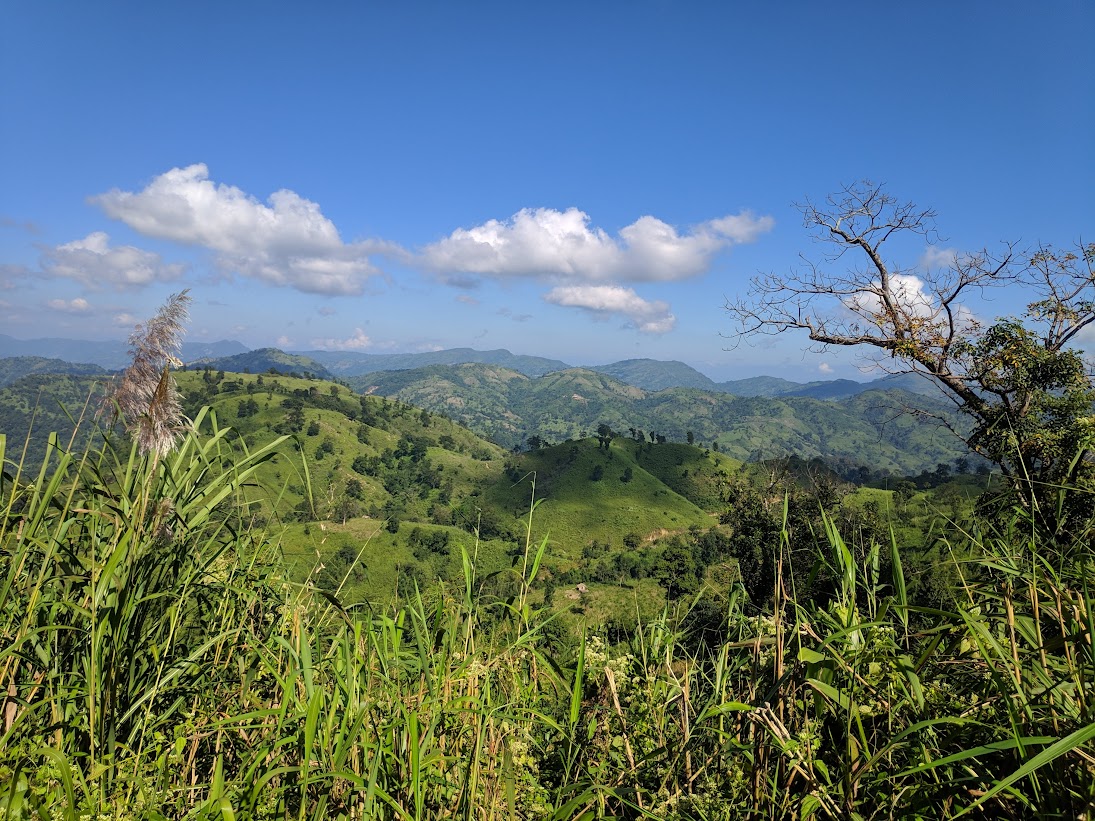
View from Keokradong Peak
At the summit, the mountains made all of us feel small without cruelty. They did not insult us or compete with us. They simply existed, and their existence was enough to put our egos into perspective.
That difference stayed with me.
I did not return from Keokradong as a completely transformed person. Real change is rarely that immediate or simple. I still carried many of the same habits, flaws, and contradictions.
But something had shifted.
I had discovered the mountains, and through them, I had begun to discover parts of myself that ordinary life had never forced me to confront. I learned that I could continue while exhausted, find beauty while in pain, and feel free by recognizing my own insignificance.
Once you begin asking these questions, there is no easy way to return to the person you were before.
That was where the change began.
That was the journey that made every later journey possible.
That was my canon event.