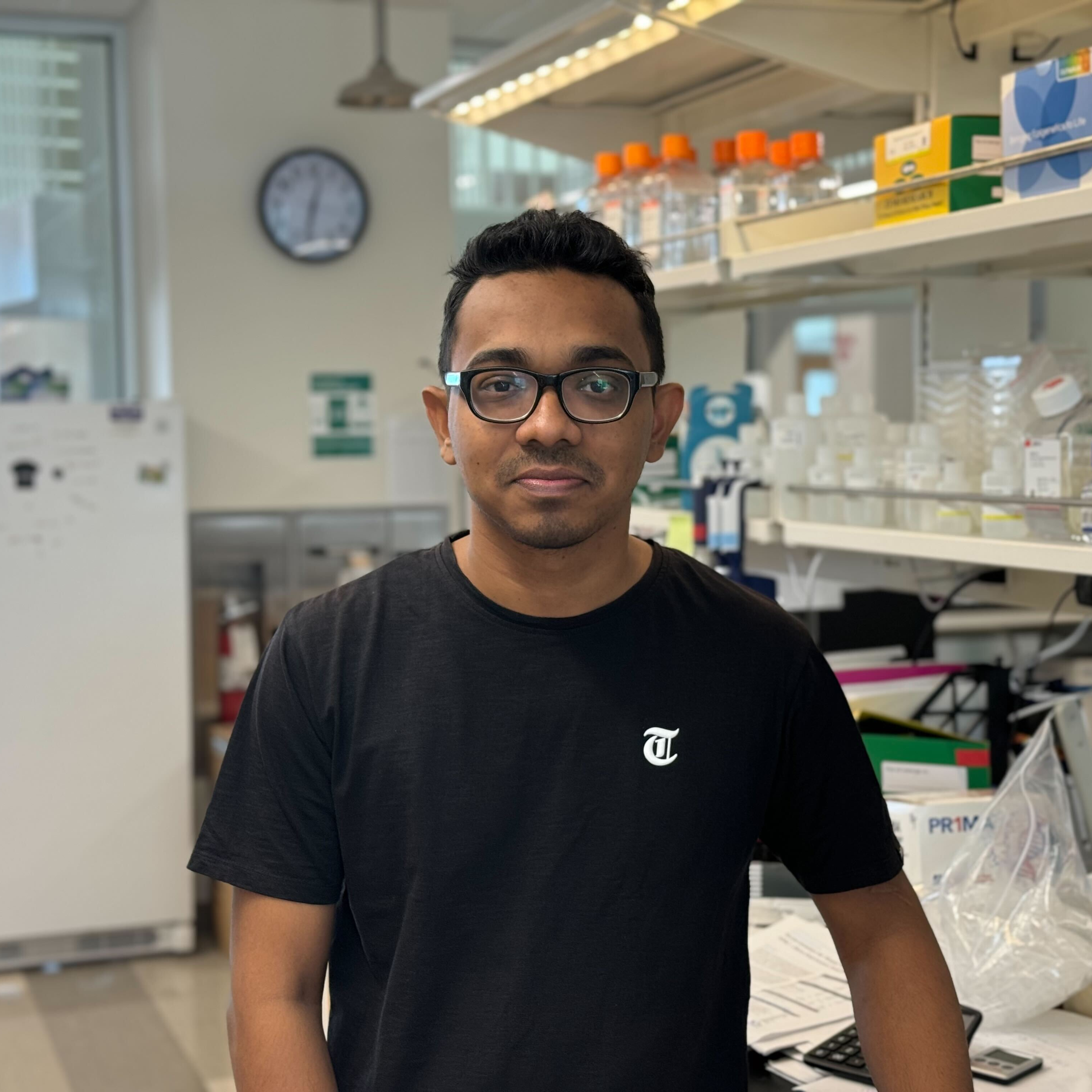
My Journey
In the grand scheme of things, we're just tiny specks that will one day be forgotten. So it doesn't matter what we did in the past, or how we'll be remembered. - Bojack Horseman
This is a short summary of my 28 years of life. I certainly have not achieved most of the things I have desired, but whatever fraction of those aspirations I have managed to achieve, I am proud of.
I was born on February 4, 1998, in Dhaka, Bangladesh. According to population statistics from around 2000, the probability of being born in Bangladesh was roughly 2.7%, higher than one might expect from a simple random choice among the roughly 200 countries in the world. Bangladesh is a developing country that, for much of my life, has lacked many of the facilities and opportunities available in more developed parts of the world. It is geographically one of the smaller countries in the world, yet one of the most densely populated and populous.
If I had to describe my 25 years of living in Bangladesh in only a sentence or two, I would compare the country to the pit in The Dark Knight Rises. Everyone is trying to escape the pit in search of a different life, but only a few successfully make the jump. Most fall back down, and many never recover enough to attempt another leap. More importantly, it often feels as though the moment someone begins climbing higher, others try to pull them back down.
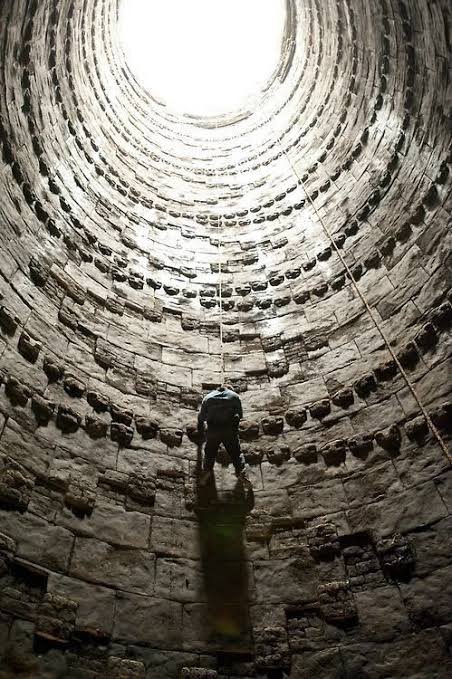
The pit from The Dark Knight Rises
As a result, many people spend their entire lives dreaming of escaping this pit while seeing only the small patch of light at its opening. To them, that glimpse can become their entire conception of the outside world because they have had little or no exposure to what exists beyond the pit. From my perspective, this isolation has allowed parts of society to remain trapped in darkness, constrained by ancient religious doctrines and social beliefs that portray venturing beyond familiar boundaries as dangerous or even blasphemous, as though only the darkest and cruelest creatures live outside and the pit itself is the only true place of happiness. Many people accept that worldview without questioning it. But nature endowed me with what I consider one of its most precious gifts: the desire and ability to seek knowledge. Knowledge allowed me to question the boundaries around me and eventually take my own leap of faith. I am glad I did.
The journey, however, was not easy.
I spent most of my school years at Banani Bidyaniketan. Looking back, I remember those years as playful and carefree. I spent much of my teenage life playing cricket with friends. I was known as a hard-hitting batsman, a reputation I was genuinely proud of. Once I began my undergraduate studies, however, I mostly stopped playing. Finding both the time and enough people to play with became increasingly difficult.
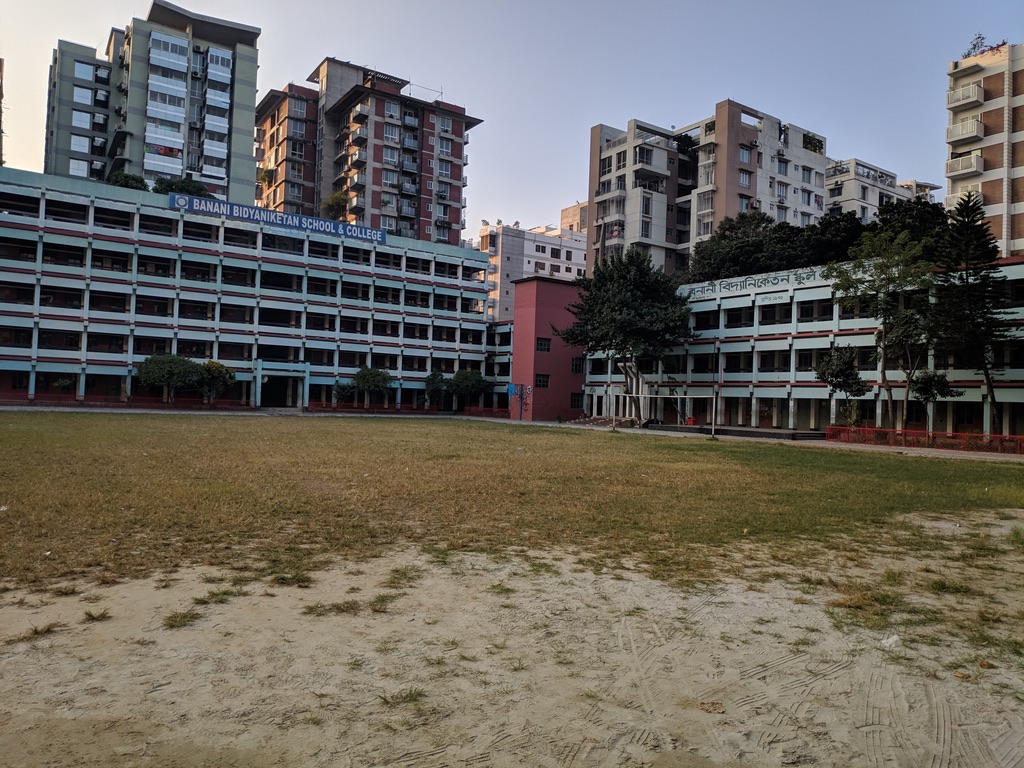
The place I spent most of my teenage at.
One of the most significant changes in my life came when I was admitted to Notre Dame College (NDC) in 2015. Before NDC, I had given little serious thought to my career or future. The environment there was different. Some of the brightest young minds in Bangladesh came together in one place, creating an atmosphere that pushed everyone to work harder, think seriously about the future, and strive to become better versions of themselves. For that influence, I remain deeply indebted to NDC and the people I met there.
In the Higher Secondary Certificate (HSC) examination, the final examination of high school in Bangladesh, I placed 9th among roughly 300,000 students in the Dhaka Division.
After HSC, I sat for the public university admission examinations. Bangladesh University of Engineering and Technology (BUET) is often compared locally to institutions such as the IITs because of its highly competitive engineering admission process. There were only around 1,000 seats. Roughly 60,000 or more students could initially apply based on their HSC results, and around 10,000 were ultimately eligible to sit for the admission examination.
I placed 15th in that examination. In addition, I also placed 12th (out of ~60,000) at Dhaka University and 1,951st (out of ~100,000) in the MBBS program. I did not participate in any other admission exam.
I then made another decision that would significantly shape my life: I chose Computer Science and Engineering (CSE), even though almost everyone around me encouraged me to study Electrical and Electronic Engineering (EEE). Even during my time at NDC, I had assumed that I would eventually study EEE. I cannot pinpoint exactly what changed my mind. Yet, looking back, choosing CSE was one of the most consequential decisions I have made, and I am glad that I followed my own instincts rather than the expectations of those around me.
A few people even mocked my decision and questioned what I would possibly do after graduating with a CSE degree. Their comments did not bother me much. I understood that their opinions were shaped by the limits of what they knew and could imagine at the time. I trusted my curiosity instead.
During my undergraduate years, I became deeply enthusiastic about learning. The structure of our semesters gave me considerable freedom to explore subjects independently. Because the final examination alone accounted for roughly 70% of a course grade, I could spend much of the semester learning and experimenting with whatever caught my attention before preparing intensively for the finals. I took full advantage of that freedom.
I completed numerous courses through Coursera, edX, and MIT OpenCourseWare. Among the most influential were Andrew Ng’s courses on machine learning and deep learning. This was around 2018, when Transformers and large language models (LLMs) were beginning to attract increasing attention in research. Naturally, I became curious.
Eventually, I designed and trained a language model for Bangla from scratch using Google Colab. It could perform fill-in-the-blank tasks remarkably well for what I had built, and watching it work gave me an enormous sense of accomplishment. This was well before today’s LLM ecosystem, when building something meant spending hours reading repositories, documentation, papers, and Stack Overflow discussions just to make a codebase work.
In retrospect, I feel fortunate to have learned programming and completed most of my undergraduate education before the current LLM era. It forced me to spend time thinking through problems, debugging them myself, and diving deeply into programming concepts rather than immediately delegating much of that cognitive work to an AI system.
Paradoxically, I think that experience has put me in a strong position to take advantage of LLMs today. I can use them as powerful tools while still examining, questioning, and verifying their outputs because I learned the nuts and bolts of programming without them. I believe this ability, to use AI without surrendering one’s own understanding, is becoming increasingly important. Yet it is a skill that people can easily neglect when it becomes tempting to delegate the entire process of thinking, generating, and executing code to an LLM.
My early work on Bangla language models soon attracted the attention of faculty members in BUET’s CSE department. While I was still in my second year, I joined the research group of Professor M. Sohel Rahman. By the end of that year, I had my first first-author publication.
From there, I never really had to look back. Satisfied with my performance, Professor Rahman involved me in many of his projects. By the time I graduated, I had five publications to my name, including three as sole first author. I graduated with a CGPA of 3.93 out of 4.00. Of the seven semesters for which conventional results were published, I was named to the university’s Dean’s List in all seven. One additional semester did not have a conventional CGPA published because examinations were conducted online during COVID.
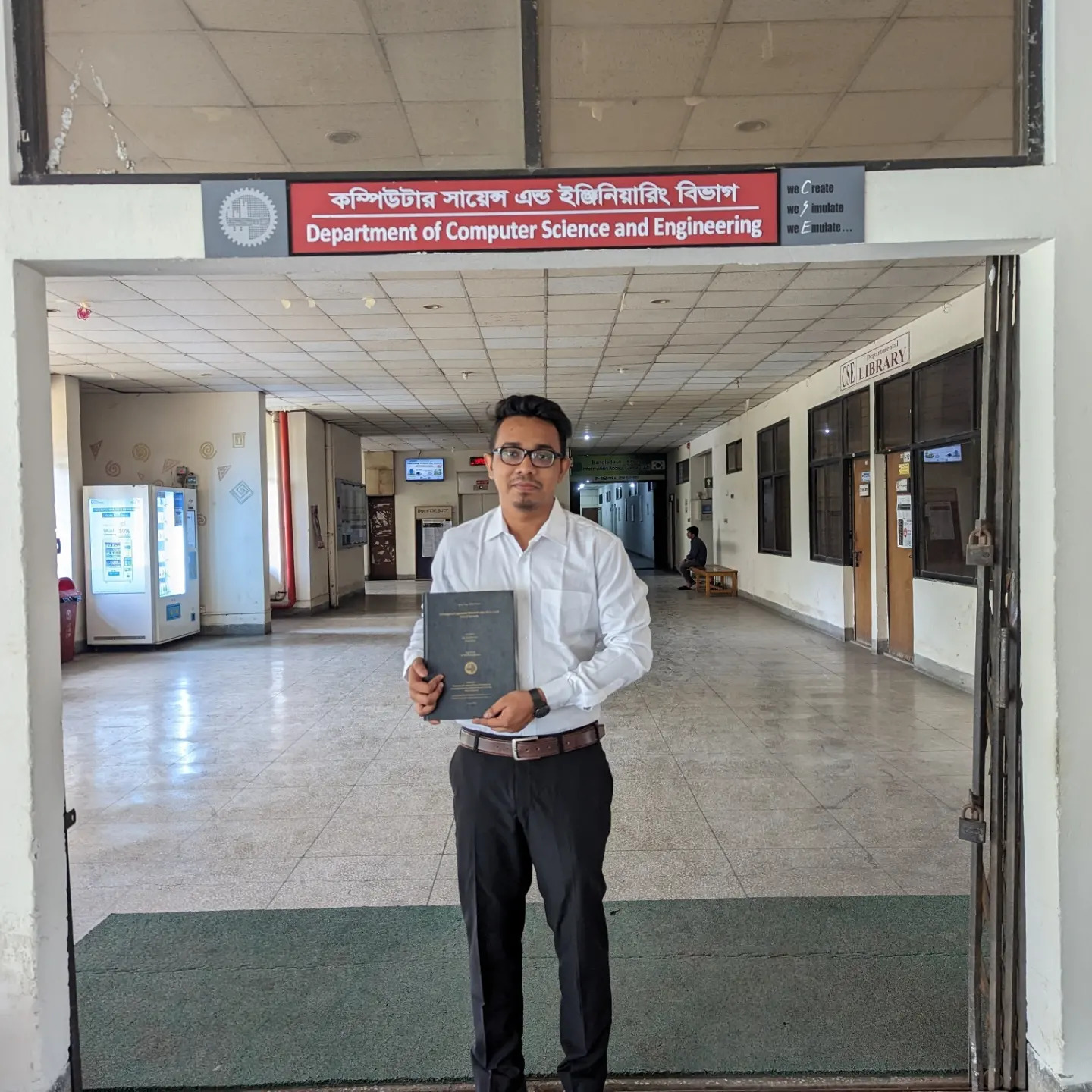
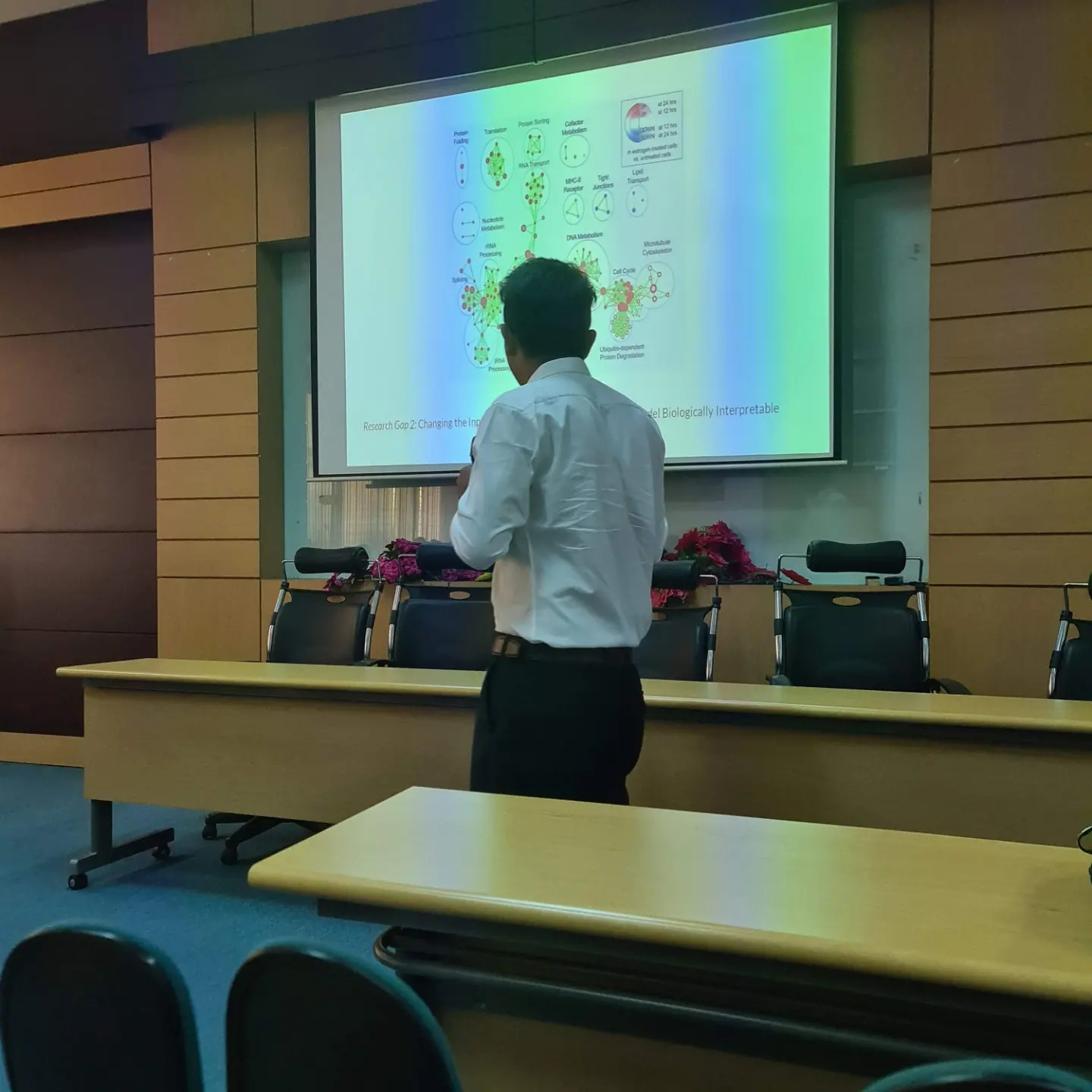
My Undergrad Thesis Defense
During the COVID-19 pandemic, I had an opportunity to apply my research skills to a problem with immediate national significance. Under the supervision of Professor M. Sohel Rahman, I independently led the design and development of a predictive model for forecasting COVID-19 cases in Bangladesh. I later presented our work to representatives of the Government of Bangladesh alongside two other teams from the United Kingdom.
The project eventually received recognition from the ICT Division and the Cabinet Division of the Government of Bangladesh as a project of national importance. More importantly to me, our work contributed to the evidence available to policymakers as they made decisions regarding quarantine measures in Bangladesh during an extraordinarily uncertain period. It was one of my earliest experiences of seeing how computational research could extend beyond academic publications and contribute directly to real-world decision-making.
Around the same period, I also became involved in a project examining the demand for labor and technical skills within Bangladesh’s rapidly growing ICT industry. I contributed extensively to analyzing and articulating the industry’s workforce and skills requirements for the Asian Development Bank. This work subsequently contributed to the development of the Improving Computer and Software Engineering Tertiary Education Project, supported through approximately US$100 million in concessional loan financing from the Asian Development Bank. The analysis also developed into an academic publication in the journal Education Sciences, for which I served as the first author.
Another major turning point came during my fourth year, when I was asked to lead a bioinformatics project in collaboration with Baylor College of Medicine. My role was to apply my background in mathematics and computer science to develop a single-cell-based model of cell-fate trajectories.
Until then, my knowledge of biology had been limited, and I was not even sure whether I would enjoy working in the field. But I was fascinated by single-cell technology and the possibilities it opened up. I began immersing myself in biology, teaching myself through textbooks, articles, and research papers, again, in an era before LLMs could simply explain an unfamiliar concept on demand.
Before long, I became deeply interested in the intersection of mathematics, computer science, and biology. That experience fundamentally changed the direction of my career. I decided that I wanted to pursue a PhD in computational biology at a medical school.
I deliberately avoided engineering schools because I wanted to work close to wet labs and experimental biology. I wanted to see tangible biological applications of my computational work and, whenever possible, validate computational predictions experimentally. Merely improving a performance metric from 90% to 92% did not give me the same sense of accomplishment as seeing a prediction made by a model actually work in a real biological system.
Eventually, I was accepted into the Computational and Systems Biology program at Washington University School of Medicine in St. Louis and the Quantitative and Computational Biology program at Baylor College of Medicine.
I chose WashU Medicine because of its extraordinary biomedical research environment, its long-standing strength in NIH-funded research, and the breadth of laboratories available across fields such as oncology, genetics, neuroscience, immunology, and many others. I would have the opportunity to explore hundreds of laboratories and find a scientific environment that matched the kind of researcher I wanted to become. During my PhD rotations, I deliberately stepped outside my computational comfort zone. I spent two of my three rotations working in wet-lab settings and learning bench science from scratch.
In my first wet-lab rotation, I learned PCR primer design, bacterial transformation, plasmid miniprep, gel electrophoresis and extraction, HiFi DNA assembly, fish injection, and fluorescence microscopy. In my second, I learned to culture head and neck cancer cell lines, treated them with IFN-gamma and IFN-beta, prepared RNA-seq, ATAC-seq, and Calling Cards libraries, and sent those libraries for sequencing. Those experiences gave me something I had specifically sought when choosing a medical-school environment: the opportunity to understand not only how biological data are analyzed, but how those data are actually generated.
Following my rotations, I joined Professor Ting Wang’s laboratory. What particularly attracted me to his lab was the flexibility and intellectual freedom it offered. Rather than simply being assigned a predefined problem, I was able to pursue my own ideas under his guidance.
I brought my background in computer science, artificial intelligence, and deep learning into Dr. Wang’s lab and developed a project focused on building predictive models of endogenous retrovirus (ERV) reactivation following epigenetic therapy in glioblastoma.
Dr. Wang’s lab is one of the leading laboratories investigating the potential of epigenetic therapies across multiple cancer types. Through collaborations with other laboratories, the group has generated a vast amount of multi-omics data spanning different cancer types, experimental conditions, and biological samples. Yet the broader field still lacks a complete understanding of the mechanisms through which epigenetic therapies act, particularly why certain ERVs become reactivated while most remain silent.
Within Dr. Wang’s lab, I lead a project that uses AI and explainable-AI frameworks to develop both predictive and mechanistic models aimed at addressing these questions. The goal is not simply to build a model that predicts what will happen, but to understand why it happens and, ultimately, what that understanding can teach us about cancer biology and therapeutic response.
My interest in connecting computational research with medicine has also led me beyond the laboratory. I was selected for the Precision Medicine Pathway, through which I am currently shadowing clinicians who treat cancer patients. This experience allows me to observe how physicians make treatment decisions, how scientific evidence translates into clinical practice, and where computational research might eventually contribute to improving patient care.
I am now beginning the third year of my PhD. (September 2026)